Showing posts with label Film. Show all posts

Monday, May 13, 2013

42 - We can still learn from Jackie Robinson


     The Integration of Baseball by Jackie Robinson in 1947 is one of the great moments of American History. In fact and in legend it defines the radical injustice of legal segregation and the courage and conviction of those who dared to defy it. 42 directed by Brian Helgeland is faithful to the power of the legend and the magnitude of the history. Perfectly cast (Harrison Ford reaches new heights as Branch Rickey), the film brings all of the central characters to life. The story is moving, eliciting tears, laughs, and admiration for Jackie Robinson at all the appropriate moments. In short, 42 is a perfect Baseball film and a splendid telling of a powerful story; I enjoyed every moment of it and the movie already ranks high among my personal favorites.
     Despite enjoying the film immensely, I must confess that it can be difficult viewing at times. The racism encountered by Robinson in this film (which is only a fraction of the suffering the poor man actually had to face) is rather ugly. The hatred behind racist rants against Robinson, the refusal to accept him for the color of the skin, and the common use of offensive racial slurs, is painful to watch. During one particular seen where the Phillies Manager Ben Chapman is berating Robinson with constant racial slurs, I was quite literally physically ill. The hatred Robinson had to deal with will bring tears of pain to your eyes. This makes parts of the film very hard to watch; very hard, but worth it. We need to see how ugly racism and other forms of hate are. We must not shield ourselves from this disgusting and shameful aspect of human behavior.
    As fine a film as 42 is, there are two aspects to this film that are lacking. First, both Jackie Robinson and Branch Rickey were devoutly religious men – both were Methodists in fact!. God was central to each man's life. I would have appreciated a slightly larger amount of screen time devoted to the spiritual basis of each man's story. But this is a minor quibble. The film is made for a mass American audience and it is largely about the struggle for integration. The second omission is more disconcerting. Absent from 42 is the large social movement, which existed for decades before Robinson played the game, to integrate the national pastime. The film rightly focuses on the courage and heart of Jackie Robinson, but a nod or two in the direction of the social movement that gave integration so strong a push would have been nice. Mr. Robinson and Branch Rickey did not break the color barrier in baseball by themselves. Despite their remarkable achievements, it takes a community of people committed to justice in order to truly achieve it.
     Despite these flaws the film is amazing. Most importantly is provides an opportunity for families and communities to talk about discrimination, bigotry, and the struggle for justice. This is must see film for all of us. Jackie Robinson's battle is our battle; the Battle for recognition of our common human dignity. To quote from the film “maybe tomorrow we'll all wear 42, so they can't tell us apart;” perhaps we should. 


Bookmark and Share

Friday, March 12, 2010

Capitalism a Love story

Michael Moore's latest film is out on DVD. It's a usual Moore flick. Some good insights, funny, but one-sided, sometimes superficial, and lacking at key points in depth. It is surely among Moore's better films and does reveal a great deal of crucial information about how our economic system is run ... or better, run into the ground.

Some of it, as in most Moore films, is really very well done. The best example of this is when Moore asks various financial experts to explain what a "derivative" is. In each case it is so complicated, they cannot! Very telling, and very disturbing.

The most interesting thing about this film is Moore's use of his own Catholic faith to attack Capitalism. Catholic economic justice runs strongly counter to our culture of greed and cut throat competition. And it is nice to hear this said. It is also nice to hear from the religious left. Too often religious messages in the media and film are right wing.

In a particularly telling and funny scene Moore dubs over an old movie about Jesus. He has Jesus mouth capitalist catch phrases, and the result is quite damning. It's impossible to imagine the Jesus of the gospels saying such things or even approving of anything like our own economic system.

I highly recommend anyone interested in the social justice aspect of Jesus' life and teaching to read Jesus a Revolutionary Biography by John Dominic Crossan. Once you have studied the figure in his historical environment, you will see that Moore has the social justice and anti-capitalism of Jesus and much Christian social justice teachings absolutely correct.

Of course the usual superficiality and pompousness of Michael Moore does hurt the film. But I think the film is worth seeing, and much of the message is well presented and substantially correct.

But if you don't have time to see Moore's film here is his October interview with Charlie Rose that pretty much sums it up:


Bookmark and Share

Thursday, November 5, 2009

Bonfire Night: The Fight against Authority


The English tradition of Bonfire night, celebrated tonight, remembers the FAILED attempt to blow up the king and Parliament by angry religious Zealot, Guy Fawkes. It has its place I'm sure.

But ever since the graphic novel - and especially the film - V For Vendetta, the Fifth of November has taken on a new meaning. Bonfire night has become a night to celebrate defiance of authority in the name of individual freedom.

As a graphic novel, and more so as a film, V for Vendetta is an enjoyable but flawed product. It is in turn silly, delusional, and cheesy. But I like to be reminded that we must be wary of power structures, and ready to stand against them.

We must remind ourselves that power structures are everywhere. These structures attempt to decree from on high, how we must life, what is wrong and what is right, what is normal and what is "beyond the pale." We give them too much power. It is we, and not the power structures and systems of domination that should determine how we live and what we are.

Reflect a little this November 5th. Think about how power structures stifle freedom and what we can do to change that in our own lives and communities.

Remember, Remember the fifth of November .....


Bookmark and Share

Sunday, October 18, 2009

Halloween Movies


As we approach Halloween I find myself watching the classic films of the holiday. Not Jason, Freddy, and Michael Myers, but rather the Universal horror films of the 30s and 40s: Dracula, Frankenstein, The Wolfman, and the Mummy.

These films are rather cheesy of course. The acting, largely the result of actors of that era being trained for stage and silent films, is poor by our standards, the effects far outdated, and the story lines are often rather weak - although I confess I find these films endearing for these reasons.

But these films have shaped what Halloween monsters are. The Draculas and Frankensteins we see trick or treating every year are the versions from these films. They have had a remarkable cultural impact. There are a number of factors that explain their enduring appeal.

These films are rather primal, touching basic fears and struggles.

First, each of the classic universal horror films deals squarely with death, fear of death and longing for death. The lines are a bit campy, hence Bela Lugosi's Dracula tells us "To die, to be truly dead ... that must be wonderful," and "there are far worse things awaiting man than death!" But most films of that or any era could not face death so head on. The fact that these are "monster films" gives them free leeway to actually explore our struggle with mortality.

Second, the power and danger of sexuality is strongly dealt with. Whether it's the Wolfman's desiring to "devour" his love interest, or the strongly implied lesbianism of Dracula's Daughter (an odd, but must see film), sex is presented as something bubbling below the surface. The characters try to control their libido, attempt to master it, but all too often fail as the force of their passions carries them to a dangerous place.

Third, there is a fear that science and technology may harm us. We hear again and again in these films that "modern science" does not permit the existence of this or that monster. Most tellingly, in The Mummy we are told that one must violate ancient graves because of "science you know." Each of these films fears that we have lost something ancient and essential because of our advances, and we are in real danger for having lost it.

Fourth, and finally, the classic horror films question and examine the notions of "normalcy" and "the other." In some, e.g. Dracula, "the other" is dangerous and must be destroyed. In many others - see Tod Browning's Freaks especially - , e.g. Frankenstein, the other is simply misunderstood and it is the "normal" people who are dangerous, vile, and destructive. The angry mobs in Frankenstein and Bride of Frankenstein are eerily reminiscent of today's "Tea-baggers" who fear shout and hate.

Because these films are "horror" or "fantasy" they explore issues that more mainstream films at that time did not. They remain worth watching for this reason. They look at issues we must still examine, they wrestle with conflicts we still struggle to understand.

So, do yourself a favor and watch some of the classic Universal Horror films this Halloween.

Bookmark and Share

Wednesday, March 4, 2009

Kate Winslet struggling with her role in "The Reader"

In the Following clip from her interview with Charlie Rose, Kate Winslet explains the difficulty of playing Hanna in The Reader.

This clip should help convey something of the complexity and depth of the story:


Tuesday, March 3, 2009

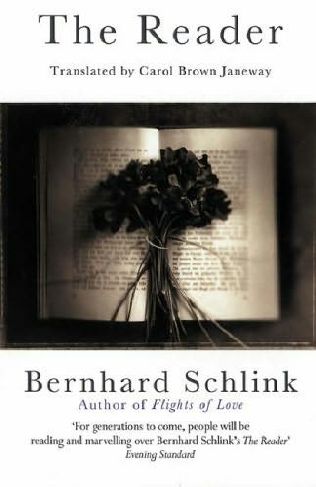
The Reader


The Reader by Bernhard Schlink


My review


rating: 5 of 5 stars

Bernhard Schlink's The Reader is a truly remarkable book. Without giving too much away, the novel presents a story of love, loss, guilt and atonement that is an allegory for Post WWII Germans' struggles with Germany's Nazi past.

How do you deal with the fact that you loved and learned from those who participated in something of great evil? How can you adapt yourself to a heritage of genocide and destruction? Are you guilty because you find yourself loving the perpetrators of heinous crimes? Can you, ought you, be able to forgive such criminals? These are the haunting questions of The Reader

The most intriguing and thought provoking aspect of the book is its ambiguity. We are left unclear about the motives and reflections of the character of Hanna, and not entirely sure about the moral status of the main character and narrator Michael Berg.

The Illiteracy of Hanna is used to powerfully convey how someone without the ability to read simply does not live and operate in the world the rest of us take for granted. It is chilling.

To read this book is to enter a world of uncertainty, confusion, and moral indecisiveness. It is disturbing and difficult; it will make you think a great deal.

Finally the prose style is rich and rewarding. Very polished and deeply engaging. Of course it was originally written in German and I read the translation in English, so I can't speak for the German prose.

I recently saw the film The Reader as well. The film is very faithful to the text, with appropriate adaptations and omissions. The acting, particularly Kate Winslet, is both powerful and passionate.

This story makes you rethink human nature and your moral convictions from top to bottom. I highly recommend the novel and the film.

View all my reviews.

Tuesday, December 16, 2008

The Best Film Adapation of A Christmas Carol

The N. Y. Times has picked the 1951 British version of A Christmas Carol as the best film Adaptation. This has always been my view as well. Alastair Sim is just remarkable as Scrooge, no one could do it better!

Check out the Link and you will see a good case made for the superiority of this particular adaptation of the story:

http://video.nytimes.com/video/2008/12/15/movies/1194835382819/critics-picks-a-christmas-carol.html?partner=permalink&exprod=permalink

There are of course many other marvelous versions. Anybody have a different pick for best version?

Also see my previous post http://mattwion.blogspot.com/2008/12/dickens-reminds-us-what-christmas-is.html for my pick of the best animated version of Carol, this one also has Alastair Sim as Scrooge.

Tuesday, November 25, 2008

Babette's Feast: A Film for Thanksgiving

This Thanksgiving we want to be reminded of our need to share and commune with one another. In that vein, the Film Babette's Feast is a great reminder of what communing with each other really means:

check out the N. Y. Times Critic's Pick of this film here:

http://video.nytimes.com/video/2008/11/24/movies/1194833387303/critics-picks-babettes-feast.html?partner=permalink&exprod=permalink


Happy Thanksgiving Everyone!