Should we fear death? How should we approach it? Does our demise threaten the meaning of life? Listen to the following discussion via Rockford University Radio and the Rock Valley College Philosophy club for some suggestions:
For better or worse Santa Claus is the most commonly recognized symbol of our modern Christmas
For my own part the Santa symbol is one of love, joy, and good will. He fills the hearts and minds of children with awe, and love, and just a bit of magic. I have even written in the past that Santa presents the most positive aspects of divinity to children
For others, however, Santa is a troubling figure whom we are better of without.
Biblical Scholar Candida Moss, whose take downs of Bill O'Reilly and Sarah Palin are splendid, has turned her critical acumen against Santa Claus. According to Dr. Moss "Mr. Claus" has simply got to go. He is, she claims, just about the worst thing that could happen to Christmas and, perhaps even worse, the very symbol of the crimes of capitalism at its most rotten. Despite her characteristic wit and charm (Dr. Moss expresses herself delightfully with virtually every sentence she writes, she is even more charming on video) one of her major arguments is rather weak. Moss claims that
Then there’s the disservice Santa does to religion. Even if Ole’ St.
Nick didn’t spend so much time cultivating endorsements and trawling
malls selling photo ops, it’s not clear that he would be beneficial for
the religion to which he is attached. For children, Christmas is the
undisputed high point in the religious calendar. Between the daily dose
of advent calendar chocolate, opportunities for budding thespians to cut
their teeth treading the boards in a nativity play, and, of course, the
presents, Christmas has it all. In many ways Santa Claus shares top
billing with the baby Jesus. And that’s if you’re going to church.
Then
one day comes the truth. After spending years deceiving our children
about the jolly man who brings presents, can we really say “Gee you got
us, but that part about the Virgin giving birth to a child? Now that’s the real deal”? We’re hardly building trust here. We’re catfishing our children. Do Christians really want to bring religion into the rouse?
I find this line of reasoning particularly unconvincing. A great many modern theologians and Biblical Scholars (even a fairly large number of clergy and laity) do not take the Virgin Birth any more literally than they do Santa Claus. The story is symbolic, it conveys deep truths about who Jesus was, not biological facts about Mary's body. Similarly, Santa Claus can be seen as a symbol of the joy and benevolence many of us associate with Christmas.
But perhaps I read Dr. Moss too literally here. She may mean only that we ought not to lie to our children and that doing so diminishes our credibility. I doubt this is so, and find it hard to imagine that any child has gone from learning the truth about Santa to distrusting their parents veracity and authority. It is also not clear to me that we cannot in anyway deceive our children, provided we do so for their own good. I don't think this criticism can stand.
If Christian parents are worried about Santa taking Christmas from Jesus, then they can simply emphasize that St. Nicholas was a Christian Bishop who served Christ above all else, and use that model of piety to inspire a similar veneration of The Good Lord in their children. There need be no conflict here.
More serious is Moss' argument that Santa symbolizes the commercial Christmas that puts profits ahead of people and cheapens all values down to mere economic transactions.
That the modern Christmas is often a gaudy and sappy affair that reeks of cheap commercialism and pushes us into a vapid consumerist frenzy for a whole month of the year is indisputable. That the modern image of Santa Claus is, and has long been, deeply connected to this commercialism is equally obvious.
Indeed, this seems to be the heart of Moss' complaint against the Jolly Ole Elf:
Any five-year-old can see that rich naughty children are pulling down
more than their fair share of the gifts. That’s if less affluent
families can afford the luxury of purchasing gifts from a figment of the
cultural imagination. When petulant rich kids get more presents than
poorer angelic ones, it sends mixed messages. The historical St.
Nicholas is said to have given money anonymously to poor children. The
commercial Santa brings laptops to rich kids. What’s the lesson we’re
teaching our children? Life’s not fair? The rules are different for rich
people? Better learn the harsh realities of life early.
But, despite the long and close connection between the two, the Santa Claus myth did not originate in advertising and consumerism. Moss herself acknowledges as much. The gift-giving St. Nicholas, and even the Jolly St. Nick of The Night Before Christmas, are hardly commercial figures.
Moss does, however, point out a problem with Santa Claus. It surely falls on us parents to be sure that we teach our children an image of Santa Claus that does not favor rich over poor, and that does not pitch commercial values over familial and personal ones.
We can do this by emphasizing Santa's selfless giving, stressing that he loves all children regardless of wealth, class, ethnicity, etc. We can tell our children to put others first and be selfless as Santa is.
How our children picture Santa Claus depends very greatly on how we portray him to them.
It seems to me that Moss entirely misses the joy, the awe, and even the sheer fun of Santa Claus. He is not simply a "sales pitch" and a challenge to Jesus. Santa is, at his best, a symbolic embodiment of goodness, generosity, and Christ-like unselfish love. His person and story can be made to impart these values to our children.
Symbols and myths can convey deep truths to the heart and mind. Once conveyed, such truths sit deeper than mere abstract reasoning can reach.
Simply telling children to care for others, to give with no thought of getting back in return, to love others, to give with joy in our hearts only does so much. But sharing with them a story, that they can later pass on to their children, may convey these truths more powerfully than simple statements ever could.
As a scholar of religion, I'm sure that Dr. Moss can appreciate the value of symbol and myth to convey important truths that are, perhaps, best expressed in that manner:
You said the following regarding the race of Jesus and Santa Claus:
These statements are not only unacceptable but demonstrably false.
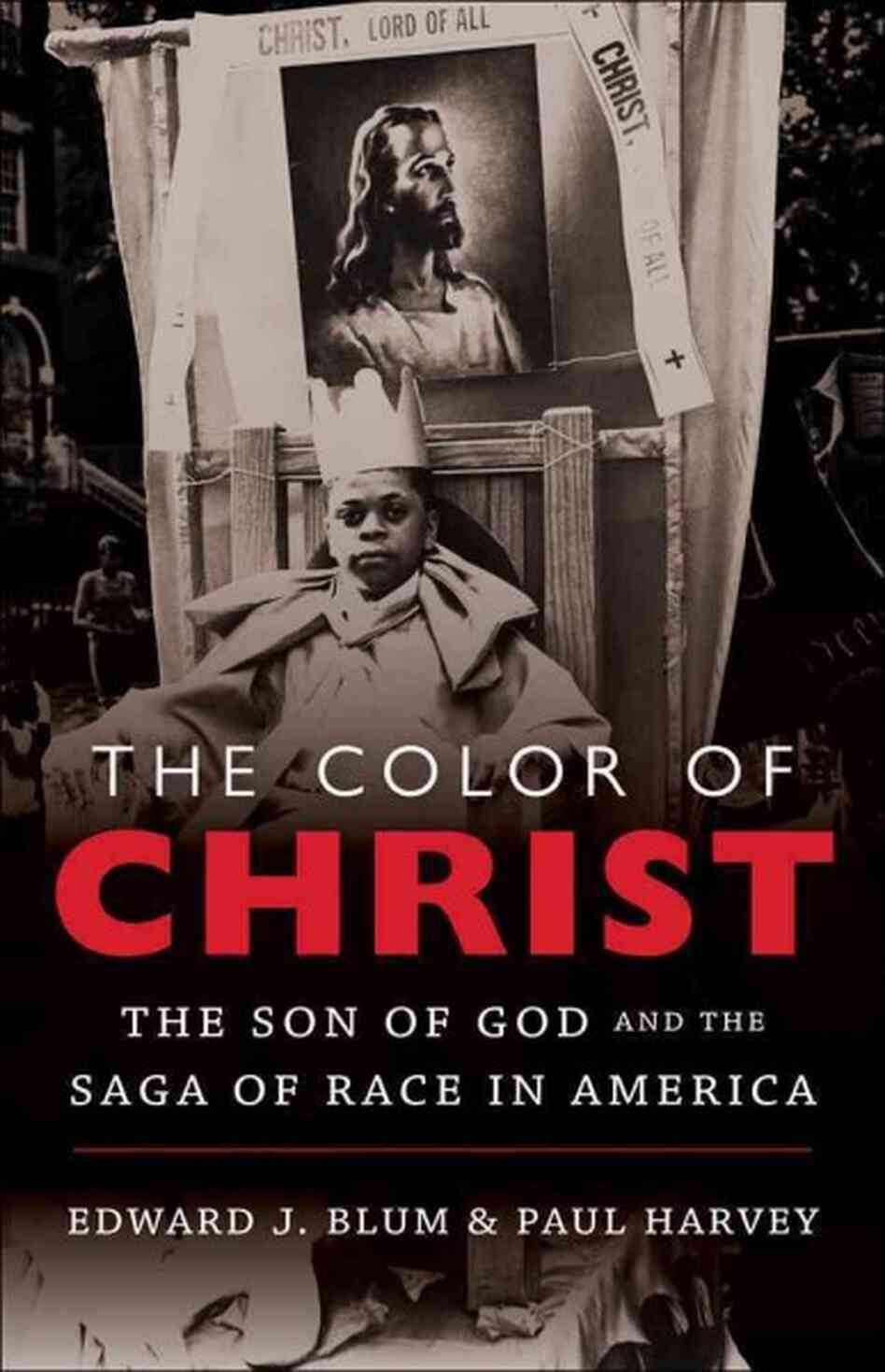
Jesus was a middle eastern man and not at all white. Below you fill find a picture of what a man from his time and place would look like it.
Next to this image I have placed a picture of a black man playing Santa Claus. He makes a wonderful Santa! Santa is mythical Ms. Kelly and can be any and all races.
To make these matters even worse. By insisting that Jesus and Santa must be white, you are perpetuating the false and hurtful claims that white's are superior to non-whites. People of all races need to feel included and affirmed, not told that their most cherished symbols are different from them.
Please rethink your claims.
Even if Ms. Kelly meant that the historical Saint Nicholas was a white man, she is mistaken on that note as well. Here is a pic of what a man from Nicholas' time and place would look like:
I highly recommend that you work on being more sensitive on matters of race and ethnicity Ms. Kelly.
Furthermore, you should do some research on the race of Jesus. I recommend that you start with the following:
Black Friday is a plague on our nation. Crazed shoppers fighting over bargain prices should disgust all decent people. This Holiday season matters are worse. For this Thanksgiving a number of big chain stores will be open during Thanksgiving dinner. Even worse, they are mandating that their employees work these hours. All of this is to get a head start on the insanity that is black Friday
This cannot be allowed to stand!
It is crucial to the preservation of close relationships and person well being that working people get to enjoy time off with their loved ones. For this this reason I think we ought to continue to recognize national holidays like Thanksgiving: time off work and time with loved ones
Workers are human beings, not machines or animals. The indignity of robbing them of their Holidays and forcing them to spend Thanksgiving dinner mobbed by Zombie consumers fighting to the death for discounts ought to be criminal; it is clearly morally repugnant.
Let us fight these tyrants!
Boycott the following stores on Thanksgiving and Black Friday:
Wal-Mart Kmart Sears The Gap Banana Republic Old Navy Michaels Toys 'R Us Whole Foods
A number of talk
show hosts, most notably Jimmy Kimmel, have had fun lately asking
folks on the street what they think of "Obamacare."
Revealingly people know very little about it:
Polls and surveys find
the same widespread lack of knowledge about what the Affordable Care act (to give the law it's proper name) actually is, and
what change to our health care system the reforms actually make.
This confusion is, I think, largely the result of the fact that The Affordable Care Act is politically very divisive. Rhetoric from multiple sides of the political spectrum has greatly obscured how the law actually works. We must get past the rhetoric and actually take a careful look at the key elements of the new health care law.
I have taught Health Care Ethics at Marquette University and Harper Community College. A key aspect of this course is a careful consideration of how health care systems and health insurance works in the United States and abroad. Because of this I've been given ample opportunity to study the details of the new health care law (The Most reliable information on what is the law can be found at: Kaiser and the AARP)
Here in short are the key elements of the law.
First, two important pieces of information.
1. It is important to note that "Obamacare" is not "socialized medicine." In countries like Canada and England there are no health insurance companies. The government pays the bill. But here in post health reform America, the for-profit private insurance companies that we have all used for decades remain the providers of health insurance for the majority of Americans too young for Medicare, too high income for medicaid, and not receiving Veterans care.
2. For those Americans who receive health care from their employer the law changes virtually nothing. You will still have the same relationship to your health insurance company that you had before. One important change here, however, is that young people can now stay on their parents plans until they are 26.
Where things have changed is the individual private market. The reasons for the big changes here come from the following provisions of the ACA:
1. Guaranteed issue - insurance companies can no longer deny coverage to anyone who applies. For decades insurance companies have denied people coverage due to pre-existing conditions, Beginning January 1, 2014 they will be legally precluded from doing so any longer.
2. The Individual Mandate - with the exception of those whose incomes are too low, everyone must get insurance or pay a tax penalty (if your income is too low and your State accepts the expansion of medicaid that the ACA offers, then you will qualify for medicaid). If you receive medicare, medicaid, veterans care or get insurance through your employer you already comply with this requirement. This is, perhaps, the most controversial aspect of the law. Many people seem to feel that legally requiring us to have insurance violates our personal liberty. It is worth noting, however, that the supreme court upheld the mandate as constitutional in 2012. It is also worth noting that the individual mandate was first thought of by the conservative Heritage foundation, embraced by Republican Presidential candidate Bob Dole, and first enacted by by Republican Governor and most recent Republican Presidential candidate Mitt Romney.
3. The Employer Mandate - with some exemptions, all employers with 50 or more employers must either provide an insurance plan to their employees or pay a tax penalty for each employee. Business with fewer than 50 employees are not subject to this requirement.
Other changes that apply to the private insurance market are that annual and lifetime limits on what insurance companies would pay have been abolished. Women can no longer be charged more than men, and individuals who already suffer from an illness cannot be charged more on that account.
Those who buy private insurance on the individual market will do so through either federal or state exchanges which must operate according to strict federal regulations. These Federal guidelines require that all insurance plans cover ten essential benefits (ambulatory patient services; emergency services, hospitalization; maternity and newborn care; mental health and substance use; prescription drugs; rehabilitative and habilitative services and devices; laboratory services; preventive and wellness services and chronic disease management; and pediatric services, including oral and vision care).
There are, in addition, 4 types of plans, platinum, gold, silver, and bronze. These plans cover 90, 80, 70, 60 percent of costs respectively. The more costs the plan covers, the higher the premium is. Most Americans qualify for a subsidy which will pay for part of their premiums, thus lowering what they will pay.
Unfortunately the launch of the federal insurance exchange (States who have set up their own exchanges - not all States have - have been more fortunate) has been something of a problem. The web sight is not working properly and most consumers cannot access it. It remains to be seen if this technical problem will result in delaying certain aspects of the law, such as the individual mandate.
The Benefits of the Affordable Health Care law are clear. For many years millions of Americans were denied access to health care because of pre-existing conditions or high costs. Many of these people will finally be able to buy health care that they can afford.
But there are disadvantages as well. Some Americans will see their premiums and/or deductibles rise. Furthermore, because the new law requires all health insurance plans to cover the ten essential benefits mentioned above, some current plans will be eliminated starting next year. These plans will be replaced by plans that cover more, and for most consumers cost less (thanks to subsidies) but to some 3-5% of Americans costs will rise up. There are those who believe that they should be allowed to pay less for their current plans which cover far less. They are not pleased with this situation. For more on this particular controversy see the very helpful piece in the New Yorker.
Most importantly the Affordable Health care Act has, hanging over it, one big question mark. The United States has by far and away the most expensive health care system in the world. It is debatable that the ACA does nearly enough to reduce these huge costs. If we really want to reduce our expensive system, further changes may very well be needed in the future.
For a further quick, comprehensible and comprehensive overview of the Affordable Health Care act in all it's particulars I recommend the following, rather humorous, 9 minute video from Kaiser:
The Integration of
Baseball by Jackie Robinson in 1947 is one of the great moments of
American History. In fact and in legend it defines the radical
injustice of legal segregation and the courage and conviction of
those who dared to defy it. 42
directed by Brian Helgeland is faithful to the power of the legend
and the magnitude of the history. Perfectly cast (Harrison Ford
reaches new heights as Branch Rickey), the film brings all of the
central characters to life. The story is moving, eliciting tears,
laughs, and admiration for Jackie Robinson at all the appropriate
moments. In short, 42
is a perfect Baseball
film and a splendid telling of a powerful story; I enjoyed every
moment of it and the movie already ranks high among my personal
favorites.
Despite enjoying the film
immensely, I must confess that it can be difficult viewing at times.
The racism encountered by Robinson in this film (which is only a
fraction of the suffering the poor man actually had to face) is
rather ugly. The hatred behind racist rants against Robinson, the
refusal to accept him for the color of the skin, and the common use
of offensive racial slurs, is painful to watch. During one particular
seen where the Phillies Manager Ben Chapman is berating Robinson with
constant racial slurs, I was quite literally physically ill. The
hatred Robinson had to deal with will bring tears of pain to your
eyes. This makes parts of the film very hard to watch; very hard, but
worth it. We need to see how ugly racism and other forms of hate are.
We must not shield ourselves from this disgusting and shameful aspect
of human behavior.
As fine a film as 42 is, there
are two aspects to this film that are lacking. First, both Jackie
Robinson and Branch Rickey were devoutly religious men – both were
Methodists in fact!. God was central to each man's life. I would have
appreciated a slightly larger amount of screen time devoted to the
spiritual basis of each man's story. But this is a minor quibble. The
film is made for a mass American audience and it is largely about the
struggle for integration. The second omission is more disconcerting.
Absent from 42 is the large social movement, which existed for
decades before Robinson played the game, to integrate the national
pastime. The film rightly focuses on the courage and heart of Jackie
Robinson, but a nod or two in the direction of the social movement
that gave integration so strong a push would have been nice. Mr.
Robinson and Branch Rickey did not break the color barrier in
baseball by themselves. Despite their remarkable achievements, it
takes a community of people committed to justice in order to truly
achieve it.
Despite these flaws the film is
amazing. Most importantly is provides an opportunity for families and
communities to talk about discrimination, bigotry, and the struggle
for justice. This is must see film for all of us. Jackie Robinson's
battle is our battle; the Battle for recognition of our common human
dignity. To quote from the film “maybe tomorrow we'll all wear 42,
so they can't tell us apart;” perhaps we should.
I teach a number of Ethics courses each semester. These courses are very enjoyable for me, and I hope for my students as well. Each time I introduce an ethical theory I look for its foundational principle: its central proposition from which it determines the rightness or wrongness of particular actions. For instance, Libertarians ground all of their determinations about what is right and wrong in a principle of self-ownership, Deontologists in a list of universal moral rules, Utilitarians in the greatest amount of happiness that can be produced, Human Rights Theorists in some list of basic rights.
The problem with all of this is that it is terribly abstract. Traditional moral theories propose a solution to the problem or right and wrong that fails to take into account the genuine motivation behind human goodness. Conceiving of morality as something like a math problem to be solved by the dry and impersonal calculations of reason, such theories forget that our our initial impulse toward acting morally is concern for and empathy with our fellows.
Compassion for others (be they human or animal) is the fire from which morality burns. The reason we strive to be good is that we care about others. We desire to help them, to keep them from harm, to accord them the same treatment we would like for ourselves. Without this initial compassion for others, the spark of morality fails to ignite and considerations or right and wrong are not possible.
Consider the activities of the most deranged among us: Do mass shooters, serial killers, and other sociopaths care for others? Clearly they do not. Could the SS guards have had compassion for their Jewish prisoners? The American slave-owners empathy for their slaves? Perhaps there was a flicker here and there, but without ignoring, repressing, or just plain not having the natural impulse to feel for others pain and rejoice with them in their happiness, they could not have acted in the reprehensible and inhuman manner that they did.
The origin of morality is feeling, not reason. Furthermore, it is not feeling for humanity in the abstract, but feelings for others that we actually encounter, that we actually have relationships with, that creates morality. Unless we start here, until moral theories take as their departure the central role of feelings and relationships in creating morality, we cannot hope to provide a satisfactory account of right and wrong.
This is not to say, however, that reason is irrelevant or unimportant to morality. Reason is extremely important, It is not enough to feel compassion, we must think out how best to demonstrate our compassion. We will encounter conflicts in our relationships with others and we need reason to manage them.
We cannot figure out how to act morally without reason. But reason cannot provide the initial burst that makes us moral. Without a feeling of solidarity with others, reason is a cold, calculating tool; capable of helping the Nazi gleefully persecute his victims or the serial killer calmly stalk his prey.
Where the feeling of compassion and solidarity with others is absent, there can be no morality. When it is present, there must be.