Showing posts with label Jesus. Show all posts

Monday, December 23, 2013

In Defense of Santa Claus

For better or worse Santa Claus is the most commonly recognized symbol of our modern Christmas

For my own part the Santa symbol is one of love, joy, and good will. He fills the hearts and minds of children with awe, and love, and just a bit of magic. I have even written in the past that Santa presents the most positive aspects of divinity to children

For others, however, Santa is a troubling figure whom we are better of without.

Biblical Scholar Candida Moss, whose take downs of Bill O'Reilly and Sarah Palin are splendid, has turned her critical acumen against Santa Claus. 

According to Dr. Moss "Mr. Claus" has simply got to go. He is, she claims, just about the worst thing that could happen to Christmas and, perhaps even worse, the very symbol of the crimes of capitalism at its most rotten.

Despite her characteristic wit and charm (Dr. Moss expresses herself delightfully with virtually every sentence she writes, she is even more charming on video) one of her major arguments is rather weak. Moss claims that
Then there’s the disservice Santa does to religion. Even if Ole’ St. Nick didn’t spend so much time cultivating endorsements and trawling malls selling photo ops, it’s not clear that he would be beneficial for the religion to which he is attached. For children, Christmas is the undisputed high point in the religious calendar. Between the daily dose of advent calendar chocolate, opportunities for budding thespians to cut their teeth treading the boards in a nativity play, and, of course, the presents, Christmas has it all. In many ways Santa Claus shares top billing with the baby Jesus. And that’s if you’re going to church.
Then one day comes the truth. After spending years deceiving our children about the jolly man who brings presents, can we really say “Gee you got us, but that part about the Virgin giving birth to a child? Now that’s the real deal”? We’re hardly building trust here. We’re catfishing our children. Do Christians really want to bring religion into the rouse?
I find this line of reasoning particularly unconvincing. A great many modern theologians and Biblical Scholars (even a fairly large number of clergy and laity) do not take the Virgin Birth any more literally than they do Santa Claus. The story is symbolic, it conveys deep truths about who Jesus was, not biological facts about Mary's body.  Similarly, Santa Claus can be seen as a symbol of the joy and benevolence many of us associate with Christmas.

But perhaps I read Dr. Moss too literally here. She may mean only that we ought not to lie to our children and that doing so diminishes our credibility. I doubt this is so, and find it hard to imagine that any child has gone from learning the truth about Santa to distrusting their parents veracity and authority. It is also not clear to me that we cannot in anyway deceive our children, provided we do so for their own good. I don't think this criticism can stand.

If Christian parents are worried about Santa taking Christmas from Jesus, then they can simply emphasize that St. Nicholas was a Christian Bishop who served Christ above all else, and use that model of piety to inspire a similar veneration of The Good Lord in their children. There need be no conflict here. 

More serious is Moss' argument that Santa symbolizes the commercial Christmas that puts profits ahead of people and cheapens all values down to mere economic transactions.

That the modern Christmas is often a gaudy and sappy affair that reeks of cheap commercialism and pushes us into a vapid consumerist frenzy for a whole month of the year is indisputable. That the modern image of Santa Claus is, and has long been, deeply connected to this commercialism is equally obvious.

Indeed, this seems to be the heart of Moss' complaint against the Jolly Ole Elf:
Any five-year-old can see that rich naughty children are pulling down more than their fair share of the gifts. That’s if less affluent families can afford the luxury of purchasing gifts from a figment of the cultural imagination. When petulant rich kids get more presents than poorer angelic ones, it sends mixed messages. The historical St. Nicholas is said to have given money anonymously to poor children. The commercial Santa brings laptops to rich kids. What’s the lesson we’re teaching our children? Life’s not fair? The rules are different for rich people? Better learn the harsh realities of life early. 
But, despite the long and close connection between the two, the Santa Claus myth did not originate in advertising and consumerism. Moss herself acknowledges as much. The gift-giving St. Nicholas, and even the Jolly St. Nick of The Night Before Christmas, are hardly commercial figures.

Moss does, however, point out a problem with Santa Claus. It surely falls on us parents to be sure that we teach our children an image of Santa Claus that does not favor rich over poor, and that does not pitch commercial values over familial and personal ones.

We can do this by emphasizing Santa's selfless giving, stressing that he loves all children regardless of wealth, class, ethnicity, etc. We can tell our children to put others first and be selfless as Santa is.

How our children picture Santa Claus depends very greatly on how we portray him to them.

It seems to me that Moss entirely misses the joy, the awe, and even the sheer fun of Santa Claus. He is not simply a "sales pitch" and a challenge to Jesus. Santa is, at his best, a symbolic embodiment of goodness, generosity, and Christ-like unselfish love. His person and story can be made to impart these values to our children.

Symbols and myths can convey deep truths to the heart and mind. Once conveyed, such truths sit deeper than mere abstract reasoning can reach.

Simply telling children to care for others, to give with no thought of getting back in return, to love others, to give with joy in our hearts only does so much. But sharing with them a story, that they can later pass on to their children, may convey these truths more powerfully than simple statements ever could. 

As a scholar of religion, I'm sure that Dr. Moss can appreciate the value of symbol and myth to convey important truths that are, perhaps, best expressed in that manner:


Bookmark and Share

Thursday, December 12, 2013

To Megyn Kelly

Dear Megyn Kelly,

You said the following regarding the race of Jesus and Santa Claus: 


These statements are not only unacceptable but demonstrably false. 

Jesus was a middle eastern man and not at all white. Below you fill find a picture of what a man from his time and place would look like it.

Next to this image I have placed a picture of a black man playing Santa Claus. He makes a wonderful Santa! Santa is mythical Ms. Kelly and can be any and all races.

To make these matters even worse. By insisting that Jesus and Santa must be white, you are perpetuating the false and hurtful claims that white's are superior to non-whites. People of all races need to feel included and affirmed, not told that their most cherished symbols are different from them.

Please rethink your claims.


Even if Ms. Kelly meant that the historical Saint Nicholas was a white man, she is mistaken on that note as well. Here is a pic of what a man from Nicholas' time and place would look like:


 I highly recommend that you work on being more sensitive on matters of race and ethnicity Ms. Kelly.

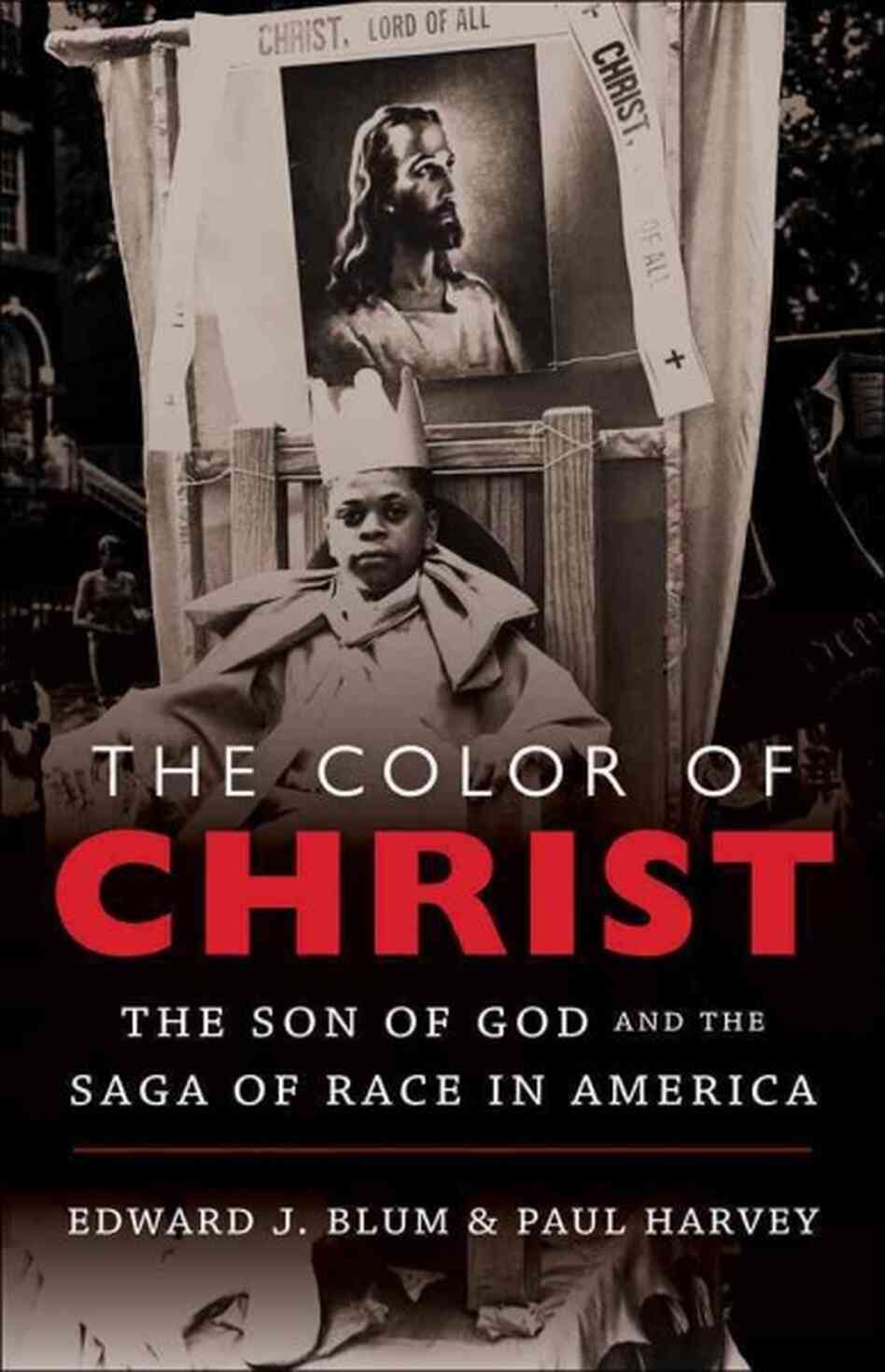
Furthermore, you should do some research on the race of Jesus. I recommend that you start with the following:

Sunday, August 12, 2012

GOP Je$us

I really wish I would have thought of something this clever and telling! But alas, I discovered it only recently. Well reading an article on Social Darwinist Romney VP pick Paul Ryan at Mother Jones Magazine, I learned of GOP Je$us. The basic premise of this clever satire is this: what if Jesus were - instead of a non-violent, anti-greed, inclusive preacher - actually like the right wing of the GOP who claim they follow him. I give you, the GOP Je$us and his Tea-Party Gospel, via his Facebook page:


The Me-Attitudes

  • Blessed are the rich, the reign of this world is ours
  • . The rich rule the world, and the rest suffer and die, often in misery. Do not let this be you my brothers! Easier to use your riches to genetically engineer very small camels that can fit through the needle's eye…

  • Blessed are the violent and the invincible, the proud and the powerful, the domineering and oppressive
  • . We can have it all! And let our status of power be the proof that we are deserving of the fruits of the labor of the middle class and poor…

  • Blessed are those who show no mercy.
  •  No mercy to the poor, to women and children, the elderly and the homeless, victims, outcasts, enemies, refugees, the hungry, the undocumented, the unborn, those on death row, those who are different, those we don’t like. And of course, those who happen to be in the way of what we want…

  • Blessed are the warmakers.
  •  Yea I say unto you, if we were not making war, we could not be said to be making much. That is what China is for! Lo, the Lord looked at China and said "Let it be the worlds factory floor," and it was good…


Compare the Me-attitudes of GOP Je$us to the Beatitudes of Jesus of Nazareth, then take a look at the real Jesus' teachings about wealth. The stark contrast between Jesus and the GOP Je$us satire is well done. This brings the heart of the matter home powerfully. One cannot follow the economic philosophy of the right wing and at the same time follow Jesus. The two are irreconcilable and fundamentally opposed.


Bookmark and Share

Monday, April 2, 2012

A Den of Thieves - The Real Meaning of Jesus in the Temple

In the schedule of Holy Week, Monday is the day that Jesus "Cleansed the Temple." For those who don't quite recall the details of that event, here is the incident as described by the earliest gospel Mark:
Then they came to Jerusalem. And he entered the temple and began to drive out those who were selling and those who were buying in the temple, and he overturned the tables of the money changers and the seats of those who sold doves; and he would not allow anyone to carry anything through the temple. He was teaching and saying, "Is it not written, 'My house shall be called a house of prayer for all the nations'? But you have made it a den of robbers. (11: 15-17)
There is a long-standing, but misleading, tradition that sees Jesus as acting out of anger. On this view, he is angry that commerce is defiling the Holy Temple. Scholarship has largely discredited this common misreading of Jesus' action in the Temple. 

Rather than throwing a "temple tantrum," Jesus is acting out a deliberate demonstration against the temple and its authorities. The commerce performed by the merchants was necessary in order to keep up the sacrifices. You had to change impure Greek and Roman coinage for pure Temple coins. This was a legitimate and proper function for Temple sacrifice. The temple could not work without these merchants. 

In other words, by tossing over the tables of the money changers and prohibiting entrance to the temple (this would have had no real effect, given the temple's size. It is a symbolic protest), Jesus is symbolically destroying the Temple. His actions indicate that it's function is invalid. Jesus, acting in the name of the God of Israel, declares by his deeds that the temple and the authorities running it are null and void. They do not speak for God. They do not have legitmate status in the God of Israel's eyes.

But why would Jesus do this?

The Temple authorities were the native ruling elites who made a fortune by cooperating with Roman rule and power. As such, they profited by helping Rome exploit and demean the Jewish peasantry. In particular, Roman commericial agriculture robbed many Jewish peasants of their land, and pushed far too many people to the margins of society and beyond. Roman rule defied the Torah's notion of land ownership, and the distributive justice of the Jewish God. 

For many Jewish peasants, the Priests and the Temple, no longer represented the Jewish God of justice, but rather his opposite, the gentile overlords who harmed the great majority of Jewish Peasants.

So in the name of the Jewish God of liberty and justice, Jesus condemns the Temple and its leaderships. He declares that far from speaking for the God of Israel, they speak against him; as do their Roman masters.

The meaning of Jesus' Temple actions was not lost on the Temple leaders, nor on Pilate. They quickly arrested him and crucified him. They got the message and promptly tried to destroy the messenger.

It is clear to me that those of us who follow Jesus today must do as he did. We must stand against the power structures in our own society that, like the Roman Empire of old, exploit the masses of the population in order to benefit the wealth and power of a narrow few. 

For me that means we need to involve ourselves in Occupy Wall Street. This, in the United States today, is the true democratic movement (or at least has the potential to be) of our times. The 99% movement identifies the real problem, Plutocracy and Corporate power, calls it out, and seeks to find solutions to it. 

Let's do as Jesus did: let's toss the money lenders from the Temple and condemn the "den of thieves" for the crooks they are.


Bookmark and Share

Saturday, August 20, 2011

The Christ of Faith: The Face of God

Regarding my post on "the historical Jesus"A thoughtful reader asked me if I cared so much about what the Jesus of history said because, perhaps, I thought "he was God." This is a question I've heard many times "was/is Jesus God?" I think the very question itself misunderstands the issue.

In popular imagination God is a supernatural (and usually male) person who "lives" outside of the universe somewhere and periodically intervenes in it to perform "miracles." If one believes in this kind of God and adds to it the un-nuanced belief that "Jesus is God." On believes presumably that Jesus was not really a human being, but simply God visiting us incognito. This perspective sees the humanity of Jesus as some kind of costume that he temporally donned before flying up back home to heaven.

I might take the view seriously if a kindergartner suggested it, but it is far from the view of any sophisticated Christian theologian.

First I repeat my own position about the reality we appropriately term "God":
I ascribe to a theology known as panentheism. To sum up this position briefly: I understand panentheism as the view that the term "God" does not refer to a separately existing supernatural and person-like being "out there" beyond us. The term "God" refers rather to reality at its ultimate level, "Being itself," "The ground of being," the all-inclusive whole. The best way to understand what these abstractions signify is through an analogy: We know from physics that reality has levels of being which require ever deeper descriptions of the same object. Take, for example, a table. At the level of human interaction the table is a solid object of such-and-such size, weight, height and so on. But at a deeper level of physical description the table is properly described as a certain relationship of interaction between fundamental particles. Both descriptions are correct, the latter simply describes the realty of the table at a "deeper" level.

The panentheist takes this basic claim about the table and extends it to reality as a whole. The universe at the level of physical observation is the total collection of matter and energy interacting in space and time. If we go deeper, however, we can think of the universe as being reality itself only at a less than ultimate level of description. If we think of reality at its greatest or ultimate depth, we must think of it has having no boundaries or limits of any kind (after all what could limit it?). Ultimate reality would then be infinite (no limits), eternal (no beginning or end), and self-caused. All things in our universe can be seen as simply various expressions of the one ultimate reality at a level of less depth. Panentheists call ultimate reality "God" partly because it is eternal, infinite, and self-caused, but also because reality as a whole is so awe-inspiring, mysterious, and tremendous, that we can only feel reverence, humility, and awe when we contemplate it. In other words, for the panentheist all things are parts of God, but the reality of God goes deeper than reality at the level of things, though God does not exist apart from things as another being; God is, rather, the "ground of all being."
Now, let us try to understand the traditional idea of the "divinity of Jesus" in light of this panentheistic understanding of God. To begin with, a great many theologians and New Testament scholars would never say, crudely, "Jesus was/is God." The position is usually stated with far more nuance. Theologians tend to say things like "Jesus is the decisive revelation of God," "the place where we meet God most clearly," "our fullest of experience of the divine in our lives," or other subtly worded variants.

Usually the theologian makes the following moves: 1) The truest way to God for the Christian is through love and justice. In other words, in fighting for justice, in compassion, in loving others, we meet the divine. 2) Jesus is the clearest expression of a human being dedicated to compassion and love that we can know (more on this point below). 3) Therefore, to the extent that Jesus incarnates the very compassion and justice that is where we find God, he is the clearest expression of God to us and for us.

In short, theologians need not - and typically they do not - say that the historical Jesus was/is God; but they are committed to the view that, for the Christian, God is made known most clearly, most fully, and most powerfully in the life, deeds, words, death, and abiding presence (for my view of the resurrection of Jesus click here) of this first century Galilean.

This is my position as well.

Let me now consider two objections to it:

Objection 1: Christians for many centuries called Jesus God, so you can't be a Christian without saying it so bluntly.

Reply: It is not the case that all Christian theologians said, so bluntly, "Jesus is God." But even if they did, the claim that religions can never change, and must always and forever express exactly the same ideas in exactly the same sense is both absurd and manifestly false.

Objection 2: "Why do you choose to follow Jesus as the decisive revelation of God? Lot's of people are committed to justice and compassion! Can't the same claims be made for Buddha, Muhammad, Gandhi etc?"

Reply: Yes the same claims can be made for other figures. In fact, to the degree that anyone lives a life of justice and compassion, that person incarnates God. There is a necessarily subjective element at play here in seeing Jesus as the fullest incarnation of God. It's similar to my love regarding my wife. I often tell my wife that she is "the most amazing, or the most beautiful, woman in the world." When I tell her this I mean it and believe it. But I'm not claiming it as some kind of objective fact about her; rather, I am proclaiming my commitment to her. My statements are statements of my commitment to her; not objective facts about her person. Yet they are not totally subjective either. If my wife turned out to be very different than the person I thought she was, say she turned out to be a cruel and evil person (she is not- don't worry!), then my commitment would end.

Exactly the same is true of my commitment to Jesus as the clearest and fullest incarnation of God for me. In saying, "in Jesus is where I see God most clearly." I am making a claim about my commitment to Jesus; not simply stating facts about Jesus (e.g. that he was 5'3). But again, this claim is not without objective content. If historical research revealed that the Jesus who actually lives was not a man committed to compassion and justice, but was actually a violent sociopath, then I could not follow him, could not see God in him.

To use another analogy. Suppose I declare that Tolstoy is the greatest novelist in history. One way, perhaps the most helpful way, to understand that is to say that this is how Tolstoy effects me: the power and beauty of literature comes to me most clearly and fully in Tolstoy. Furthermore, although there are many other novelist I also find great, none quite effect me like Tolstoy does. This claim does require, I think, that Tolstoy actually be a remarkably great writer, but to call him the greatest instead of say Dostoevsky or James Joyce requires an element of subjectivity.

Similarly, I do see God made known in lives like Gandhi and Desmond Tutu, but other lives just don't quite bring God to me like Jesus does.

I believe that we all incarnate God to the degree that we are passionate about justice and have compassion for our fellow human beings. Jesus of Nazareth, both in the gospels and, as far as I can tell, in history was a person who manifested these traits to a remarkable degree. I do not, of course, claim he did so to an unparalleled degree. But, in a way similar to my love and commitment to my wife, or my personal view that Tolstoy is the greatest novelist of them all, I find that it is Jesus who most clearly makes God known to me.

That is how I understand the divinity of Jesus.

Update (8/24/11):

In conversation with a Theologian friend on this post, I mentioned to him that:
The suffering of Jesus and the failure of his mission is clearly part of this revelatory package too. In the brutal death of this man, his betrayel by those close to him, etc, we learn, clearly, that God is present - maybe even most present - in our moments of pain, sorrow, suffering, defeat, and loss.
He replied to me by adding:
I would add that in Jesus Christ God pronounces a final verdict on the choice human beings have made and continue to make for violence. But instead of inflicting violence on his enemies, God chose to absorb their violence in himself, in the one nailed to the cross.
It is clear to me that these insights have to be added and developed to my account of the "divinity of Jesus."

Bookmark and Share

Tuesday, August 2, 2011

Jesus: Proclaimer of the Now and Future Kingdom

When I first created this blog my purpose was to discuss politics. But it appears that religion has come to dominate more and more of my posts. Things change of course and I will, no doubt, return to politics as a primary focus eventually. For now, however, I shall continue to post on the matters most in my thoughts, and presently those matters pertain to religion.

I want to write briefly about the central message of the Historical Jesus.* But first some necessary preliminaries:

1) By the term "Historical Jesus" I refer to the actual flesh and blood person who walked the dusty roads of ancient Israel, insofar as that individual can be reconstructed by means of historical-critical scholarship. This Jesus is not to be confused with the "Jesus of Faith." The latter is Jesus as he is experienced in the religious life of Christian believers. The difference between these two is crucial to solid scholarship.

2) The four New Testament gospels are not straightforward historical accounts. This is a fact that no serious Bible scholar or historian doubts and it has been well known for around 200 years now. The gospels contain myths and legends (e.g. the birth stories, the temptation by the devil, walking on the sea) exaggeration, theological musings projected into narratives about Jesus, propaganda, and so forth.

3) Despite (2) the gospels are not useless as historical documents. Two centuries of painstaking historical research has established beyond reasonable doubt that the synoptic gospels (Matthew, Mark, and Luke) have a solid historical foundation. The gospel of John is not close to history and is not accorded the same status as the synoptics by historians.

4) The narrative spine of Mark (and thus Matthew and Luke who used Mark as a primary source) is broadly historical: Jesus came from Nazareth, briefly followed and was baptized by John the Baptist, shortly after John's arrest went out on his own mission, chose disciples to follow him and do what he was doing, taught in parables, gathered people together around a common meal, worked as an itinerant healer and exorcist, and, at Passover in the year 30, journeyed to Jerusalem, confronted the leaders there with the judgment of God by word and deed (the demonstration in the temple) and was crucified by Rome for his troubles.

5) Scholars also generally agree that much of the teaching in a hypothetical document called "Q" is authentic to the Jesus of history. Q is a source that was used by Matthew and Luke (they also used Mark). We have no copy of this source as it is lost. But it is clearly visible in the passages that Matthew and Luke have in common but that are not in their other source, Mark. It is also fairly clear that the majority of the parables (though not the interpretive gloss gospel writers sometimes give them) go back to the Jesus of history as well.

6) But, even in "Q" and Mark we do not have unbiased plain history. And scholars are careful to point out that in those two early sources some material is still suspect. In particular, passages that too obviously reflect the theology of the later Jesus movement (as evidenced in, say, Paul's letters) is unlikely to go back to Jesus. Passages in which Jesus speaks to the conditions of his followers in the 50s and 60s (see Mark 13) are clearly not from the Jesus of history, nor are passages in which Jesus speaks of himself as a heavenly judge and one who will come again - this rules out all future "son of man" passages, which has very important ramifications, as will be seen below.

With these preliminaries in place we can now ask who Jesus was? Or better, what picture of Jesus emerges from our earliest sources (Q and Mark - excluding the obviously unhistorical passages)?

I will here restrict myself to the core image in the teaching of the historical Jesus: The Kingdom of God. Better translated as the "ruling activity of God" this phrase refers to the concrete activity of God in the world whereby He establishes that He is in charge. The phrase does not indicate a place or nation in which God is actually the king.

Though the phrase "Kingdom of God" could mean many things, by the time of Jesus it serves as an eschatological image. Eschatology is that branch of theology dealing with "end-times," death, judgement, eternal life, Heaven and Hell. But used in reference to the period in which Jesus lived it refers rather to the expectation and hope, shared by many of the Jewish people at the time, that God would soon act decisively in human history to once and for all end injustice, oppression, and evil and usher in an age of prosperity, peace, and harmony.

Some scholars misleadingly speak of the time that God would do this as "the end of the world." But that is not what most of these Jewish people expected (Crossan The Greatest Prayer, 79). What they expected, rather, was that God would transform this world, not end it. Many did expect that only a supernatural act could accomplish this and thought also that events like the raising of the righteous dead to new life would accompany the eschaton. Indeed, most early Christians thought that the kingdom would be decidedly established by a return of Jesus to earth, to end evil and usher in an age of everlasting peace.

Many scholars have claimed that Jesus' own eschatology was close to that of the early Christians. He too, so they argue, expected a supernatural event in the very near future that would transform the world forever. On this view, Jesus' message was simply "the kingdom is coming soon, so you better repent and get ready for it."

I don't think this position is particularly well supported for several reasons. First the only gospel passages in which Jesus speaks of an imminent and spectacular arrival of God's kingdom are in the passages in which he speaks of the coming of the son of man (himself) from heaven. But the work of such scholars as Geza Vermes and Norman Perrin (as well as many others) demonstrate clearly that such passages do not go back to the historical Jesus, but are products of the early Jesus movement and depend upon the belief that the executed Jesus is raised up to God's right hand and that he will return from there to establish everlasting justice and peace. These passages reflect the view of Jesus' followers after his death, not the view of Jesus himself.

Second, Jesus' message in Q and Mark is simply not "repent, pray and wait for God to act." On the contrary his message reads more like "This is what the kingdom is, you are called to live out and participate in that kingdom, so get to work!" (Crossan The Greatest Prayer, 90)

So the overtly apocalyptic or end-of-the-world Jesus is not the Jesus of history. Nevertheless, I cannot quite agree with those scholars who claim that for Jesus the Kingdom of God is only a present reality made known to those who realize it in themselves. Even without the son of man passages there are enough texts that show that Jesus did teach that the kingdom, though clearly a present reality to enter now, in its full glory lies in the future (Matthew 5: 3-11, Mark 14: 25, etc.).

Did Jesus then believe that the great eschaton was soon to come? That God would indeed radically act so as to transform the world forever?

It seems to me that a careful reading of the earliest sources does not support the claim that Jesus spoke of a Kingdom of God about to burst upon the world in the future, either immediately or at some unspecified time. Nor do those teachings support that Jesus denied this in favor of a mystical present kingdom. Geza Vermes has expressed the position I am reaching for well:
[Q]ueries concerned with whether the kingdom had come, was on the way, or would come later, must be irrelevant. At issue in New Testament eschatology is the actual movement itself of turning back, of entering into the kingdom. It is in the surrender of the self to God's will that his sovereignty is realized on earth (Jesus in his Jewish Context, 35).
And Norman Perrin expressed it similarly:
In the teaching of Jesus the emphasis is not upon a future for which men must prepare, even with the help of God; the emphasis is upon a present which carries with it the guarantee of the future (Rediscovering the Teaching of Jesus, 205).
In short if we are to understand the eschatological mindset of the historical Jesus we must look to what he actually says about the kingdom. Jesus speaks of the kingdom as a reality that people can enter now (Luke 16.16), that is among us (Luke 17:20), but that will be our destiny in the future as well (Mathew 8:11). The kingdom is known in acts of healing (Luke 11:20) in the embracing of social outcasts, forgiving each other, in peace, non-violence, love for others, and the fight for justice (Matthew 5-7). In short, it is in healing each other, forgiving each other, battling injustice, and ending oppression that the kingdom is entered into by all who choose it here and now.

For Jesus, it appears, the full fruits of the kingdom do lie in the future, but it does not seem that his message is about waiting for that future. Rather than seeing the kingdom as imminent - as about to burst forth on the earth - it seems that Jesus saw the kingdom as ultimate. The Hebrew God of justice and compassion would, in the end, perfect the world, would eliminate injustice and usher in a time of everlasting peace and plenty for all. This is the heart of prophetic Judaism, and the core of the vision of the historical Jesus. Where Jesus takes his faith in God's kingdom a step further is in his clear conviction that the coming kingdom is even now already present. Like the leaven in the dough that has not yet risen, or the mustard seed that has not yet grown into a great tree, the kingdom is here, now and we may enter it, confident that the tree will grow and the bread will rise, and we must work with it.

So the message is not to wait for God to fix things. The message of the historical Jesus is rather, embrace the outcasts, combat injustice, forgive those who have wronged you, heal the sick. Do all this and you have entered the kingdom. As John Dominic Crossan puts it:
[Jesus called others] to do exactly what he himself was doing: heal the sick, eat with the healed, and demonstrate the kingdom's presence in that reciprocity and mutuality. It is not, he said, about intervention by God, but about participation with God. God's Great Cleanup of the World does not begin, cannot continue, and will not conclude without our divinely empowered participation and transcendentally driven collaboration (The Greatest Prayer, 90).
*My understanding of the Historical Jesus is most indebted to the work of John Dominic Crossan and Marcus Borg. But I also draw considerably on Geza Vermes and Norman Perrin. To a lesser but non-trivial extent I am indebted to the work of N. T. Wright and Richard Horsley. I find the Jesus of such scholars as Paula Frederickson, Ed Sanders, and Bart Erhman to be historically problematic (given its rejection of politics and its reliance on "the son of man" style eschatology), and the very non-jewish wondering sage (who seems to have no relation to Jewish politics or eschatology!) of Robert Funk and Burton Mack even more so.

Note: The Picture accompanying this post is from a BBC documentary which attempts to construct a face for Jesus that actually looks like a 1st century Galilean.

Bookmark and Share

Wednesday, September 29, 2010

Sunday, September 19, 2010

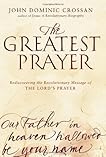
Crossan's Revolutionary Prayer Book

The Greatest Prayer: Jesus's Revolutionary ManifestoThe Greatest Prayer: Jesus's Revolutionary Manifesto by John Dominic Crossan

John Dominic Crossan's newest book - besides offering tremendous literally criticism and poetic insight - provides much needed depth into a subject matter that those who ascribe to liberal theology sometimes struggle with.

Accustomed as we are to a Christian tradition that all too often reduces prayer to "asking God for things," but at the same time philosophically unable to think of God as a person-like being, we simply don't know what do to with prayer; or as Paul of Tarsus (quoted approvingly and used at length by Crossan) puts it "We do not know how to pray as we ought" (Rom. 8:26).

Crossan shares a rejection of any crude anthropomorphic understanding of prayer, "it is an immature view of prayer that addresses a Supreme Being radically apart from us who thinks, and wills, knows and hears, grants and refuses more or less as we do, but with infinite broadband" (28).

Noting that the Prophets of ancient Israel seem to reject prayer and insist that God requires distributive justice (care for widows, aliens, and orphans) instead of prayer and ceremony, Crossan nonetheless does not think we are faced with some either/or. For him, prayer and justice are distinguishable but inseparable. Like two sides of a coin, we cannot have prayer without justice or justice without prayer (20-21).

From this starting point, Crossan turns to the most well known prayer in the Christian tradition, variously called the "Our Father," or the "The Lord's Prayer." This prayer, Crossan argues, expresses the heart of the message of Jesus. The prayer asks us to come together as equals, to become heirs of God, and to work together to establish the divine reign here on earth. We do this by sharing with each other fairly and equally.

Crossan spends much of the book describing the vision of an egalitarian justice found throughout the pages of the Bible. Most striking is his thouhtful examination of the use of the Sabbath tradition. Crosssan argues, persuasively, that the Sabbath is the crown of creation in Genesis Chapter one, and that the later traditions of the weekly Sabbath, Sabbath year (every Seventh year), and year of Jubilee (a kind of super Sabbath every fiftieth year), is designed to recall and enact a world of unity, non-violence, equality, and peace. His discussion of the Sabbath is among the finest I have read.

Prayer, Crossan argues, is meditation on the divine vision of a just, fair, peaceful, and non-violent world. The message of Jesus is a message that we can and must work together with God to bring about such a world. When we pray, then, "The Lord's Prayer," we remind ourselves that God and God's kingdom are present only when share our resources, forgive others their debts, and work together for peace, and that God's kingdom will only be fully present when ALL have enough, when ALL debts are forgiven and when ALL people are free to live together and live peacefully.

The book builds on Crossan's earlier work, especially God and Empire, and most of the themes are found throughout his writings. Yet there is a freshness to the presentation here, an application that warrants attention. Although most of the themes are not new for Crossan, how those ideas effect our prayers, and particularly how we say "The Lord's Prayer" is a novel application of them.

If you are open to non-traditional Christian theology and a faith informed by reason and historical method, this is the prayer book for you.

Bookmark and Share

Sunday, April 4, 2010

Why do you seek the living among the dead?

For those who are not interested in Easter at all, this post will not matter. Also, for those who do celebrate Easter, but as a family (non-religious) holiday, or fertility festival, this post is not relevant either. I have no quarrel with these views, I merely am not addressing them here. Fertility festivals and family holidays can be very fine things, but I want to write on the importance of Easter as a commemoration of the resurrection of Jesus.

Let me state clearly that I affirm the resurrection of Jesus. There is, however, a twist. I do not believe that Jesus was physically raised from the dead. That is, I do not believe that on the third day the body of Jesus was physically transformed and his tomb found empty.

The reasons I doubt this are lengthy and complex and I will here only summarize them: 1) most crucified victims were not buried, and if by rare chance one was they were dumped in a common or shallow criminal's grave. The burial of Jesus by Joseph of Arimathea reads like a contrived tale to (a) save Jesus from this fate, and (b) help account for the resurrection in narrative terms. 2) The stories read like symbolic accounts. The resurrection is said to happen at sunrise, there are angels, the stone is magically "rolled away." This reads like legend. 3) The appearance stories in the gospels cannot be harmonized and are the clear inventions of their authors' theology. 4) It seems clear to me that by presenting the stories as they do, the gospel writers did not intend to convey literal fact. 5) Paul, our earliest Christian writer and a self-proclaimed "witness" of the risen Jesus says nothing about an "empty tomb," and strongly indicates that the resurrection of Jesus - whatever it was - was not the transformation of a corpse.

Nevertheless, I don't want to press this issue. If you believe that Jesus really did bodily rise up from the dead on Easter Sunday, and the tomb was really empty, then fine. I have no desire to combat that belief. My question is this: can the resurrection of Jesus be affirmed by one who does not believe the empty tomb story? Who does not affirm bodily resurrection?

I believe that it can.

Here is how I understand what the earliest followers of Jesus were saying: When Jesus was crucified they were afraid and they fled in despair, but they soon found that the power that they knew in Jesus was still present in them! Not only that, they felt that it was still Jesus bringing this power. That is, the earliest followers of Jesus were somehow aware (visions were most likely involved here) that Jesus was still with them, empowering them to do what he did; to heal the sick, condemn injustice, champion the poor, and include the outcasts.

I do not mean by this that they merely continued Jesus' mission or that his teaching or ideas lived on. Rather, I mean to say that the disciples of Jesus felt the "living presence" of Jesus empowering them to do as he did, and this forced them to say "Jesus lives." Jesus, they now believed, was "with God" and "with them." And I believe they were right.

Don't get me wrong, I have no idea what happens after death. I do not think traditional views of heaven and hell are likely to be true. And I have no idea if any of our personality survives death, in fact I lean against that. But I do think that something of the essence of what we are is eternal and not merely mortal. It is this contact with and experience of the eternal aspect of Jesus' being that caused his disciples to say "He is risen!"

But "Jesus Lives" is only half of the Easter proclamation. These disciples affirmed also that "Jesus is Lord." For them, Jesus did not merely continue to be with them, but to call them and challenge them, and bring to them the very being and power of their God. The risen Jesus challenges those who encounter him to radically reorient themselves; not only his presence but his call to mission is the heart of Easter faith.

I do not profess to know what kinds of experiences these disciples had. I was not there, and what we have (other than Paul) are the purely symbolic accounts in the gospels. But I am convinced that they experienced the real presence of the real Jesus as a compelling power within themselves.

The success of the Jesus movement resulted in the fact that these experiences of the "risen Jesus" were not isolated, but could be had by others. Christians who had never known Jesus during his life, could and did experience him as a "living power" calling for their authentic response.

And what was the call of Jesus? The call to "follow him." And this meant, a life committed to forgiveness, inclusion, compassion, healing, non-violence, social justice, and peace. It is this life that the risen and living Jesus still can bring to those who look to him, and to me this is what faith in the resurrection of Jesus means.

So, what happened to the body of Jesus? Presumably one of the few horrid fates that befell most crucifieds. But it is irrelevant. As the gospels rhetorically ask us, "why do we seek the living among the dead?" The spirit of Jesus lives on calling us. If we answer that call he can empower us to walk as he did and follow his way.

He is risen indeed!

Happy Easter.


Note: Originally Published last year.


Bookmark and Share

Friday, April 2, 2010

Good Friday: a Passion for Justice

On Good Friday Christians around the world commemorate the death of Jesus. I confess I've never been able to entertain the strange notion that Jesus' death magically takes away our sins.

There are various versions of how this works: the most common being a very primitive and barbaric suggestion that Jesus died in our place. Such a claim presents a view of God that is hardly lovable.

So I don't prefer to think of today as the day of remembering how Jesus "died in our place" or some other such weird notion.

What I choose to remember is that Jesus was crucified by imperial power. The reason, historically, that Jesus was executed - think about that executed! - was because he disturbed the status quo. In the name of the Kingdom of God - the Jewish God of justice and peace - Jesus condemned the ways of empire, and the system of domination and exploitation.

The death of Jesus was a direct result of his passionate commitment to peace, justice, and compassion in the name of God and God's kingdom. That is what ought to be remembered.

The great Medieval theologian Peter Abelard argued that Jesus' death should not be understood as a substitution or a ransom paid, but as an example of divine love. An example that, if we truly contemplate it, transforms us so that we become better people.

Abelard, it seems to me, was right. The importance of the death of Jesus is that it shows how committed he was to the central goal of his life, and inspires us to be just as committed.

The religious importance of this death, for Christians, is this: Jesus' death was not merely the result of his commitment to justice and compassion. Rather, it was also his firm conviction that God is found chiefly in a life of Justice and compassion; a life he himself embodied.

Note: I originally published this post last year. I thought it worth re-posting


Bookmark and Share

Thursday, April 1, 2010

Do this in Remembrance of Me


Today is Holy Thursday, the day when Christians remember the last supper, the foundation of that most sacred of Christian meals, the Holy Communion.

It is historically very uncertain if the accounts of the last supper actually go back to the Historical Jesus or if they are later constructions of the church. My own inclination is that Jesus did celebrate a "last supper" with some of his followers. I doubt he said the "words of the institution," but I suspect he asked them to "remember him while they ate and drank." But perhaps not even that is historical. There is something more important about this meal.

In standard Christian theology Holy Communion is deeply connected with Jesus "dying for the sins of the world." I'm not very interested in that theology. Jesus' death is very important. He was put to death by an Empire and a leadership that despised everything he stood for to make an example to would be rebels. That death is, in many ways, a profound conclusion to his life and mission. But I don't believe in vicarious sacrifice or magic rituals, so the "dying for our sins" part does not move me. I am, however, deeply moved by the ritual of Holy Communion.

Communion reminds as that we are all one, like cells of one body, and that we were meant for "life together" in Boenhoffer's phrase. It is also a reminder that God is intimately near to us, as near as the bread and wine we digest. But there is more to the ritual even than that. Eating together was a (perhaps the) central element in the ministry of the historical Jesus.

Historians and New Testament scholars are unanimous in recognizing an "all-inclusive table fellowship" or "open commensality" as a central practice of the ministry of Jesus. In the ancient world who you ate or did not eat with mattered very greatly. Table Fellowship was a microcosm of the lager society, you did not eat with the the "lower people" or "outcasts."

Jesus directly challenged this ancient table practice with his own. Jesus dined with all manner of people, rich and poor, righteous and sinner, outcast and respectable soul, tax-collect and harlot, P and scribe. For Jesus, all set together to dine as equals. Jesus, from all accounts, appears to have been principally concerned with undoing the divisions of society. His ministry of eating and healing appears to have been designed to radically transform human relationships from exclusive to inclusive, from hierarchical to egalitarian.

The practice of all eating together as equals was the realization of Jesus' vision. In having all dine together as equals, Jesus was not merely proclaiming, but actually destroying the boundaries that divide. No one was to be an "outcast" any longer.

It all probability that is what communion grew out of - Jesus' mission to unite us all; to break apart the divisions which cause strife between us.

So if you take communion tonight or anytime this Holy Week do indeed remember Jesus. But forget theological claims about his divinity or sacrificial death (I suspect that the Historical Jesus would have found such claims a profound waste of time) try to remember his mission to unite, heal, reconcile, and bring together.

In a world still so divided and marred by the violence of those divisions, perhaps it would be good to remember Jesus' call to unity and to try to live it a little.


Bookmark and Share

Sunday, March 28, 2010

Palm Sunday: A Passion for Peace through Justice


Today is Palm Sunday, the beginning of Holy Week for Christians. On Palm Sunday Jesus enters Jerusalem riding a donkey, hailed by followers waving palm branches. The action is a deliberate symbolic protest.

Biblical Scholar John Dominic Crossan pinned an article just two days ago which explains exactly what Jesus was up to:
Jesus went up to Jerusalem to make twin demonstrations, first against Roman imperial control over the City of Peace and, second, against Roman imperial control over the Temple of God. In other words, put personally, against the (sub)governor Pilate and his high-priest Caiaphas.
Together with his friend and colleague Marcus Borg, Crossan wrote an excellent book a few years back with elaborates and clarifies Jesus purpose in Jerusalem: The Last Week. Early in this book they explain that:
The Meaning of the demonstration is clear, for it uses symbolism from the prophet Zechariah in the Jewish Bible. According to Zechariah, a king would be coming to Jerusalem (Zion) "humble, and riding on a colt, the foal of a donkey" (9:9).... The rest of the Zechariah passage details what kind of king he will be .... This king, riding on a donkey, will banish war from the land - no more chariots, war-horses, or bows. Commanding peace to the nations, he will be king of peace.

Jesus' procession deliberately countered what was happening on the other side of the city [that Sunday, Pilate entered the city in a pompous pro-empire procession]. Pilate's procession embodied the power, glory, and violence of the empire that ruled the world. Jesus' procession embodied an alternative vision, the kingdom of God.
The kingdom of God is the heart of Jesus' life and message. Dedicated to non-violence, inclusiveness, justice for the poor and afflicted, and peace through justice for all, Jesus entered Jerusalem intentionally opposing his message and his mission to the power and injustice of empire.

The problem with Rome and the Priesthood for working so closely with Roman power. Was that this power disenfranchised, exploited, and oppressed the peasantry (a good 90% or so of the population) simply to create wealth and power for the elites.

Or to quote from Crossan once more:
After centuries of subjugation to various empires, the Jews of Jesus' time wanted to know: if God is just, and the world belongs to God, why is the world so unjust? One stream of Jewish tradition answered that question with this mantra: God will overcome, someday. At some point in the future, God would not only clean up the mess but also create a perfect world.... 
[To fight against Roman imperial power] Jesus told his companions to heal the sick, to eat with those they healed, and to announce that the Kingdom of God had arrived. Healing is the basic spiritual power. Eating is the basic physical power. That mutual sharing of spiritual and physical power, in a sense, recreated the sharing aspects of peasant life in contrast to the greedy life under Antipas' Romanization process. 
Think about those twin aspects for a moment. Those who bring healing and those who furnish eating are not exactly in the same position. They represent, respectively, itinerants and householders. By itinerants, I mean people pushed off family farms or family boats as the New World Order arrived in Lower Galilee. 
Think, for example, of how readily fishermen followed Jesus. By householders, I mean families who know how easily they could lose their own farms or boats in a changing economy. As itinerants and householders faced one another, the former saw where they had been, and the latter saw where they could be. The program of the Kingdom was to join both groups in support and common life.

In Leviticus 25:23 God says that, "The land shall not be sold in perpetuity, for the land is mine; with me you are but aliens and tenants." Land is life itself and cannot be bought and sold like other commercial commodities. In the gospels and throughout the New Testament there is little said about land and much said about food. But the continuity is clear--land is there for food, and the basis of life is land because it produces food.

Jesus' Kingdom program was not just about politics or economics as distinct from theology. It combined religion, politics, and economics; it was about divine distributive justice; it was about the ownership of this world; it was about a theology of creation ("Jesus' Kingdom Program" Belief-net).
In other words, Jesus challenged his hearers to disobey Roman power by living in God's kingdom here and now. In effect he claimed that Roman authority was null and void, that the Temple leadership was dissolved, and that God was ruling in our midst. No wonder the authorities killed him!

To follow Jesus, therefore, is to oppose the forces of empire and violence. To fight for the radical inclusion and healing of all people.

Palm Sunday offers us a choice: we can follow Jesus the messiah of peace and justice, or align ourselves with the forces of empire. THAT is the gospel; THAT is the passion of Holy Week.
UPDATED: APRIL 1, 2012


Bookmark and Share

Monday, August 24, 2009

Faith and Health Care reform

A while back I wrote a blog post in which I asked my readers to imagine how Jesus would have treated people who came to him to be cured if he operated like a Health Insurance Company (See "If Jesus were a Health Insurance CEO." I think that the question of religious faith and universal health care is an important one.

On that note, I am going to refer the reader to two pieces from the Washington Post "On Faith Panel"

First, Jim Wallis explains the rules for Health Care found in Leviticus, the basic idea was that everyone in Israel must have health care whether they could afford it or not.

See Wallis' piece here

Second, Aana Marie Vigen argues that anyone who follows Jesus is committed to making sure that all people have access to health care. In other words, Health care is a right. Furthermore, Vigen argues that a strong public option is the best way currently under discussion to ensure the christian duty to provide affordable and universal coverage.

See Vigen's piece here

I confess that I cannot understand how anyone could claim to be a follower of Jesus and think it is acceptable to live in a world where anyone is denied care, or even in a world where people regularly fall into debt and go bankrupt because of their medical bills. This seems utterly wrong for those who follow a man who preached "good news to the poor" and spent all his time healing the sick (without asking for a premium by the way).

As for the public option? A public option is a proposal that if passed would simply be a government funded insurance option that would force private insurance companies to provide better coverage at lower costs. The CBO estimates that no more than 12 million people would enroll in said public option. The bills that include have crafted in a way that it can't have an unfair advantage over private plans, and public plans work well in other countries and even in our own (Medicare) without any of the horrors that its opponents fear. Nor is it too expensive, simply reversing the Bush tax cuts, or cutting unnecessary subsidies by medicare to private insurance companies, or curbing unnecessary military spending, or not invading another country like Iraq, would provide far more than enough money to pay for the change. All a public plan will do is cut costs, and improve quality of care.

And people who follow the healer from Nazareth oppose this?!

Bookmark and Share

Monday, June 15, 2009

If Jesus were a Health Insurance CEO

Just imagine if Jesus operated the same way the health Insurance industry does. The gospel story would read like this:

Once when they were passing through Capernaum, a blind man cried out to Jesus. And the blind man said to him, "Lord, help me!" And Jesus said unto him, "what would you have me do for you?" And the blind man said "Lord, help me to see again." And Jesus sat down and wrote with his finger on the ground and would not answer. But the crowd pressed Jesus for an answer. So Jesus got up and said unto the blind man; "I am sorry but I cannot heal you. I'm afraid that you have a pre-existing condition. Health care is not a human right and you have no right to expect the state to take care of you when you cannot afford to pay." And Jesus left the blind man for another village.
One need only read the gospels to realize that Jesus never did or would refuse to heal anyone. The health insurance industry, on the other hand, makes massive profits precisely in collecting premiums while denying care. Som
ething is clearly wrong with this!


Bookmark and Share