Showing posts with label philosophy. Show all posts

Saturday, April 28, 2012

Spinozoan Spirituality

"I believe in Spinoza's God who reveals himself in the orderly harmony of what exists, not in a God who concerns himself with fates and actions of human beings." ~ Albert Einstein


The 17th century rationalist philosopher Baruch Spinoza is not usually regarded as a spiritual or religious thinker.  On the surface this fact is odd. Spinoza writes of "God" so frequently that the romantic poet Novalis dubbed him "that God intoxicated man." But Spinoza's God is not the divine lawgiver and potentate of traditional western theism. 


For Spinoza God is the infinite and eternal substance of which all finite things are but temporary expressions. His God is not person-like, not a law-giver nor a judge of human actions. Furthermore, his God did not create a world out of free will. For Spinoza the world is nothing more than the totality of all of God's necessary self-expressions. In fact, Spinoza goes so far as to identify God with nature itself - at least with nature understood as the active and creative power that is "reality as a whole", though not simply with the total collection of things in the world. Because of this, many have claimed that Spinoza's non-personal and absolutely non-supernatural God is really no God at all. This deity surely could never inspire us to dance, pray, love, or die for it.


And yet, there is much in Spinoza's writing to suggest that he is filled with a profound personal piety and deep spirituality toward his God. In part five his masterpiece the Ethics Spinoza argues that the ultimate fulfillment of human life is the love of God. This love fills the mind with peace, calm, and serenity. The greatest joy we can know comes from knowing God and loving God.


Commentators as diverse as the Catholic Father Copplestone and the atheist Steven Nadler have claimed that we can't take Spinoza's words too seriously here. All he really means, they argue, is that we should have an awe and appreciation of the rationality and order of nature. Spinoza, so they say, means by love "nothing more" than the joy that comes from understanding the natural world; he is not speaking about a personal relationship with a heavenly Father. 


They are right of course. Spinoza does think of loving God solely in terms of understanding and appreciating the workings of the natural world. He says as much, "He who clearly ... understands himself an his emotions loves God, and so much more in proportion as he more understands himself and his emotions." (E5P15) I must confess, however, that I fail to see why this disqualifies Spinoza's thought as spiritual.


It is certainly true that Spinoza's God is not the God of popular level Judaism and Christianity. It is also true, therefore, that Spinoza's understanding of "spirituality" cannot mean love for a person-like supernatural being who can love me back in the same fashion (indeed, Spinoza specifically says that God cannot love me in any human fashion (EVP18-P19)). But are we really going to insist that spirituality and even religion must be restricted to a relationship with a supernatural and person-like being? If so, then I fear we will have to qualify a great many Buddhists, Taoists, and even many Western mystics from our definition.


Spinoza is spiritual in the sense that Carl Sagan understood that term. In Sagan's words:
When we recognize our place in an immensity of light‐years and in the passage of ages, when we grasp the intricacy, beauty, and subtlety of life, then that soaring feeling, that sense of elation and humility combined, is surely spiritual.
Albert Einstein expressed much the same sentiment when he claimed that: 
"The scientist is possessed by the sense of universal causation. His religious feeling takes the form of a rapturous amazement at the harmony of natural law, which reveals an intelligence of such superiority that, compared with it, all the systematic thinking and acting of  human beings is an utterly insignificant reflection."
This captures Spinoza's attitude perfectly. Awe, humility, reverence and deep appreciation. These are the only conceivable feelings in one who has grasped the order, unity, and sheer rationality of reality itself. Furthermore, when we understand that we are are one with reality, a finite and temporary expression of that infinite and eternal power and process, we cannot help but rejoice in that. If such emotions are not spiritual, if such attitudes are not religious, then I have no idea whatsoever what they are. 


Appreciation of reality as a whole, joy in understanding our place in and unity with it, humble love for the power and awesome order of it: this is the heart of Spinozoan Spirituality. But it is not the whole of it.


In his Theological-Political Treatise Spinoza carefully argues that the truths of traditional religions are not ontological or historical, but moral. Religion is true to the extent, and only to the extent, that it teaches justice and charity. A religion that encourages a society where all are treated fairly, where everyone has a decent standard of living, and every person shows compassion to those in need is a true religion. A religion that teaches and preaches the opposite of these is a false one. 


For traditional Judaism and Christianity this moral imperative derives from being children of God. We love each other as God loves us. Spinoza would not put it that way. For him justice and charity arises out of recognition of the deep unity and interconnection of all things as expressions of one and the same underlying infinite and eternal power. Furthermore, it is our powerful connection to one another, our being "like each other" that compels us to be good to one another. 


This connection with each other, this connection with reality, this moral imperative to care for one another and treat each other with justice, charity, and compassion is the expression of true religion in actions, just as awe, humility, reverence, and joy are the expressions of true religion regarding that infinite and eternal ground of being. In both these senses, Spinoza is a deeply spiritual and truly religious man.


In our time when the conventional forms of our religions no longer satisfy many, perhaps the spirituality of Spinoza can speak to us. The alternative to traditional Western spirituality and religion need not be the secular atheism of Camus and Sartre. Unlike such emotionally unfulfilling  existentialism, Spinoza's brand of naturalism has a great deal to offer us. 


Samuel Beckett would have us believe that we are waiting for a Godot who will never arrive, searching for a meaning that simply is not there. Baruch Spinoza claims, on the other hand, that Godot is not what we thought, and meaning is not where we thought it was. We don't need to accept the tedium and meaninglessness of godless and horrid existence. On the contrary, we need to reconsider what God, meaning, and existence are.

Bookmark and Share

Thursday, May 19, 2011

Dissertation Defense : Videos of the Questions and Answers Round 1

Following the post of my summary of the dissertation, I thought I'd add some videos of the first round of the question and answers sessions. In many ways this is more important and interesting than my summary:


Bookmark and Share

Tuesday, May 17, 2011

Spinoza's theory of individuals: Video of my dissertation defense

Hello Readers!

I successfully defended my dissertation today and am now "Dr. Wion." It is very nice to have earned this degree after 16 years of toil, debt, and struggle. I provide here the videos of my summary of the dissertation. The Q&A sections of the defense will be posted later. If you don't know Spinoza's thought that well, I recommend that you read the Introduction to my dissertation which I have pasted here right below the video.


Introduction

Spinoza speaks often of individuals. Indeed, the well-being of a particular set of individuals, namely human individuals, is the principal focus of his philosophy. Naturally we expect such a systematic philosopher as Spinoza to provide a theory about what, precisely, an individual is. This expectation is bound to be present with regard to any philosopher who stresses the importance of individuals. For Spinoza, however, the problem is particularly acute, for he famously argues that there is only one substance, one self-existent being. If there is only one substance, it seems to follow that there is only one individual. Since substance in the western philosophical tradition is ordinarily restricted to particular individuals, this seems to be a sensible conclusion. It thus appears that Spinoza would conclude that there is only one individual. He does not do this, however. He repeatedly speaks of individuals in the plural, in particular of human individuals and their well-being. It is obvious that Spinoza holds that there are multiple individuals. Since he holds that there are many individuals but only one substance, it follows that most individuals are not substances. This invites the question of what an individual is for Spinoza.

In this study, my principal concern is to answer the question of what Spinoza holds an individual to be. My secondary aim is to argue that Spinoza's conception of an individual has important moral and political consequences regarding the nature of the state and the role of the community in the life of the individual.

I will present my reading of what an individual is for Spinoza and the moral and political implications that follow from his conception of individuals over the course of five chapters. Chapter 1 will argue for and explain my reading of Spinoza's system as a whole. We cannot begin to understand Spinoza’s conception of an individual without a firm grasp of the nature of his larger metaphysical system. This means that we must first clarify Spinoza’s central metaphysical concepts. These concepts are principally found in Ethics 1 and 2. They include the concepts of substance, attributes, and modes, as well as the central ideas which Spinoza offers on the relationship of the mind to the body, and his argument for universal casual determinism. A thorough investigation of Spinoza’s conception of the individual requires an adequate comprehension of these concepts.

In my second chapter, I will look closely both at Spinoza's primary texts for his understanding of what an individual is and at the work of leading interpreters on this aspect of his thought. The critical issue that I will examine in chapter 2 is what exactly counts as an individual for Spinoza. Although this issue, for reasons that will be presented, cannot be fully resolved, I will venture some conclusions about the origins of Spinoza's account of individuals and what he considers to be paradigmatic individuals.

Chapter 3 proceeds from the doctrine of individuals in general to a particular application of that doctrine. My focus here will be on whether or not the state (or “civil society”) counts as an individual. This question is important because Spinoza claims that the human individual is part of some larger individual, though he never explicitly says what this larger individual is. Since, for Spinoza, to be part of a larger individual is to have one's very nature determined by that individual, it is absolutely critical to determine what that individual is. In this chapter, therefore, I will carefully examine the work of Alexandre Matheron and his critics, primarily Steve Barbone and Lee Rice. Matheron argues that Spinoza thinks of a civil society as a kind of individual of which human beings are a part. Rice and Barbone argue against Matheron's reading.

In chapter 4, I will shift my analysis to the moral and political implications that follow from Spinoza's understanding of what an individual is. I will argue that Spinoza, contrary to some common readings of him, is not an egoist. Spinoza is not an egoist because his conception of individuals is primarily a relational one; whereas egoism, I will argue, depends upon a non-relational theory of individuals. To demonstrate this contrast between a relational and non-relational understanding of individuals and its role in interpreting Spinoza's position, I will carefully examine the work of feminist scholars who have written extensively on this issue. I will also contrast the work of these thinkers with the contribution of Rice.

Chapter 5 will briefly examine some political implications for Spinoza's theory of the individual. In particular, I will argue that Spinoza's understanding of the individual requires a strong commitment to what is often called “the welfare state.” To illustrate his commitment to a strong welfare state, I will argue, on the basis of his general political theory and several key texts, that Spinoza would support universal health care coverage.


Bookmark and Share

Sunday, April 17, 2011

Spinoza: The Movie

I have just discovered that there is a movie about Baruch Spinoza! As I have written my dissertation on Spinoza, I find this very interesting.

The film does not present a very deep or even an entirely accurate understanding of Spinoza's philosophy. But presenting Spinoza as "the Apostle of Reason," weeping, cringing, screaming, and feebly coughing blood as tuberculous saps his life away, makes for interesting viewing.

As he implores all those around him to think rationally and live honestly, the irrational fanaticism of his society grows more violent, more deceptive, and ever less sane.

As you watch (it's only 52 mins long) pay special attention to the angry mob and Spinoza's reaction to their ways.

Here's the film:


Bookmark and Share

Thursday, March 10, 2011

How to Become a Teacher...: Preface: A Change of Plans

So I just discovered a new blog on teaching that I think all my readers should check out. Here it is:

How to Become a Teacher...: Preface: A Change of Plans: "A funny thing happened while pursuing my dream of becoming a philosophy professor. I hated, (this may even call for all caps) HATED my mast..."

Bookmark and Share

Wednesday, March 10, 2010

That Catastrophic Spider Immanuel Kant

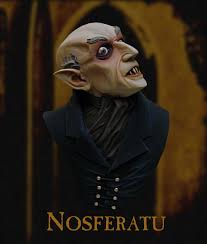
Nietzsche once remarked that Immanuel Kant was a Catastrophic Spider. By this he meant that Kant's moral Philosophy sucked the life out of human beings. I suppose today we might refer to Kant as a "vampire" hence the image I have placed here of Nosferatu resembling the sage of konigsberg.

It is not hard to see why Nietzsche thought this. For Kant all our personal drives, goals, and inclinations must be sacrificed to an abstract and absolute duty. This is even worse then it sounds. Kant makes it quite clear that if we do good deeds out of natural inclination our actions have no moral worth. We must act, Kant asserts, out of a pure respect for duty; it is not enough to do our duty, we must do it simply because it is our duty. No other reason has moral worth.

Kant uses two examples to illustrate his bloodless claim that we must act for the sake of duty alone. First, Kant explains - one can almost hear the stern Prussian lecturing and imagine him wagging his finger at us - that a person who is naturally kind and charitable toward others (the "friend of humanity" Kant calls him) cannot be morally praised. He is good to others because his character is kind. This will not do, he is acting out of inclination, not a purely rational sense of duty.

Kant then asks us to consider a man of "cold temperament" a genuine misanthrope who has no desire to do good for others, but makes himself do so out of sheer duty. This man's actions have moral worth. He is, for Kant, a moral hero. In much the same vein, Kant would be forced to say that loving parents who raise their children well out of natural affection cannot be morally praised, but hateful parents who despise their children and yet strive to do right by them for the sake of duty alone are morally commendable!

Something has surely gone wrong here. Kant acts as though our character, the kind of person we are, is not something for which we can be morally praised. On the contrary, he argues that a good character seems to prevent us from being authentically moral. An impoverished theory if there ever was one.

Can any one honestly believe that we are only moral to the extent that we act against our character and inclinations? This is perverse! Surely who we are matters at least as much as what we do.

To see just how impoverished Kant's morality is check out the correspondence between Kant and Maria Von Herbert. That entire correspondence with scholarly commentary can be found here. The gist of the conversation is as follows. Von Herbert wrote Kant explaining that she was seriously contemplating suicide but knows from reading Kant that suicide is not morally permissible.

As the correspondence continues, we see that Von Herbert is chronically depressed. She writes:
My vision is clear now. I feel that a vast emptiness extends inside me, and all around me - so that I almost find my self to be superfluous, unnecessary. Nothing attracts me. I'm tormented by a boredom that makes life intolerable. Don't think me arrogant for saying this, but the demands of morality are too easy for me. I would eagerly do twice as much as they command. They only get their prestige from the attractiveness of sin, and it costs me almost no effort to resist that.
The commentator notes that Kant is here confronted with a Kantian moral saint. The woman has no passions and therefore simply acts out of a concern for duty alone. In a very telling passage Von Herbert wonders if Kant himself is as empty and lifeless as she is:
I beg you to give me something that will get this intolerable emptiness out of my soul. Then I might become a useful part of nature, and, if my health permits, would make a trip to Kñnigsberg in a few years. I want to ask permission, in advance, to visit you. You must tell me your story then, because I would like to know what kind of life your philosophy has led you to - whether it never seemed to you to be worth the bother to marry, or to give your whole heart to anyone, or to reproduce your likeness. I have an engraved portrait of you by Bause, from Leipzig. I see a profound calm there, and moral depth - but not the astuteness of which the Critique of Pure Reason is proof. And I'm dissatisfied not to be able to look you right in the face
Kant, unable to see this woman as anything other than a "crazy lady," dismisses her letters and refuses to respond. Ten years later she finally did commit suicide. I concede that Von Herbert is not really the "perfect Kantian" she has no passions to master. For Kant an act appears to be moral to the extent that we have mastered our natural passions which run contrary to this. But her chief motivation is duty, and her lack of passion poses no problems for a Kantian. For Kant must, in the end, regard our natural impulses and desires as something we would be better off without. Maria Von Herbert lacks these impulses and desires and the result is chronic depression. She rightly sees that Kant's philosophy pushes us all in that direction. This is a very serious problem.

Kant's total failure to see, in this woman, a profound criticism of his philosophy as lifeless is damning. I would not, however, consider it worth the bother of a blog post if this were just about Kant.

Throughout his work Kant stressed that he is simply the philosophical spokesmen for common sense morality. I fear he is right. Kant's cold, impersonal, and inhuman ethics are the logical conclusion of a very common conception of what morality is. Many of us think of morality as essentially prohibitive. It is a set of external commands that, more often than not, forces us to oppose our natural impulses and normal inclinations, that demands we obey regardless of our happiness or well-being. Kant builds his theory with the dreadful consistency of a math problem on just this conception.

One need not reflect all that deeply to see that this conception of morality and the moral life is the spider Nietzsche said it was. An ethic that makes enjoyment and character, well-being and fulfillment the enemy of duty is a sick one.

Whatever the proper theory of ethics is, this is not it.

We must think again.

Bookmark and Share

Tuesday, March 9, 2010

Diogenes' Lamp


Diogenes of Sinope is not a name one often hears. Even in the world of Professional Philosophy his name is not among the most studied minds. By way of short summary, Diogenes was a Cynic, a word which does not quite carry its contemporary meaning of a cynical and bitter person. In the ancient world a Cynic was one who repudiated - in word and deed - the entire culture of normalcy and "fitting in" that dominates the lives of most of us. For the Cynic culture is filled with injustice, exploitation, and inhumanity.

The basic idea is that social conventions and the desire for status that arises from them enslave us. Insofar as we attempt to conform to the ideals and patters of the dominant society, we are in bondage. And not only are we in bondage, but we exploit and demean one another. Only a rejection of the norms of society as binding on us can liberate and empower us.

This often took extravagant forms. Cynics frequently eschewed property and social standing - Diogenes himself was said to live in a barrel - they damned titles and any official power. Wealth, fame, and worldly success was frequently anathema to them. The logic of the cynic is that the world corrupts, society corrupts, we must return to nature and free ourselves of such corrupting influences.

One need not look far to see they have a point. The amount of hurt that has come from human beings' need for power, wealth, status, position, and comfort is truly staggering. The degree of violence, death, and needless tragedy that results from our struggle to succeed in the social world is so vast that I cannot begin to enumerate it.

Perhaps the most famous story about Diogenes is the tale of his wondering about town in broad daylight with a lantern. Asked why he was behaving in such a manner, he declared "I am only looking for a human being." The implication is that he had not found a human being. We, all of us, have failed to live up to our humanity. What can that mean? How have we failed? The injustice and villainy that fill the world may be our despairing answer to these questions.

In a world where the rich continue to prosper at the expense of the poor, a world where violence is the norm, discrimination an every day occurrence, injustice, brutality, anger and hate commonplace, have we yet to find a human being? Have any of us lived up to what we might be?

Need we light the torch brighter? Or does Diogenes' lamp merely reveal that there is nothing to find?

Bookmark and Share

Sunday, January 17, 2010

The Spinoza of Market Street by Isaac Bashevis Singer

I have been reflecting of late on the role of reason and passion in our lives. What is the proper relationship of the two? Which is more central to what we are and what we should be? If either are. What exactly does it mean to be rational?

I won't attempt to answer these questions in a short blog post. Such questions are meditation for an entire life time. I do, however, recommend that we all reflect on them; and I can think of few better companions for such reflection than a very short short The Spinoza of Market Street by Isaac Bashevis Singer

Click on the link and read it. Basically the short story explores one man's flawed understanding of rationality and passion. The end of the story is a bit ambivalent and leaves one wondering if the story is a victory or a failure and what exactly, in the end, true rationality is.

Read it! You'll enjoy it and it will make you think.


Bookmark and Share